
Digital logic and design refers to the process of designing digital circuits and systems using logic gates and other digital components. This field of study is essential for the development of modern technology, including computers, smartphones, and other digital devices. Digital logic and design is an interdisciplinary field that combines elements of electrical engineering, computer science, and mathematics to create efficient and reliable digital systems.
At its core, digital logic and design is concerned with the manipulation of binary data, or information that is represented using only two possible values (usually 0 and 1). This binary data is processed using logic gates, which are electronic circuits that perform logical operations on one or more binary inputs to produce a binary output. By combining these logic gates in various ways, complex digital systems can be created that perform a wide range of functions.
The study of digital logic and design is essential for anyone interested in working in the field of digital technology. Whether you are interested in developing software or hardware, understanding the principles of digital logic and design is crucial for creating efficient and reliable systems. In this article, we will explore the basics of digital logic and design, including the different types of logic gates, how they are combined to create digital systems, and some of the key concepts and terminology used in this field.
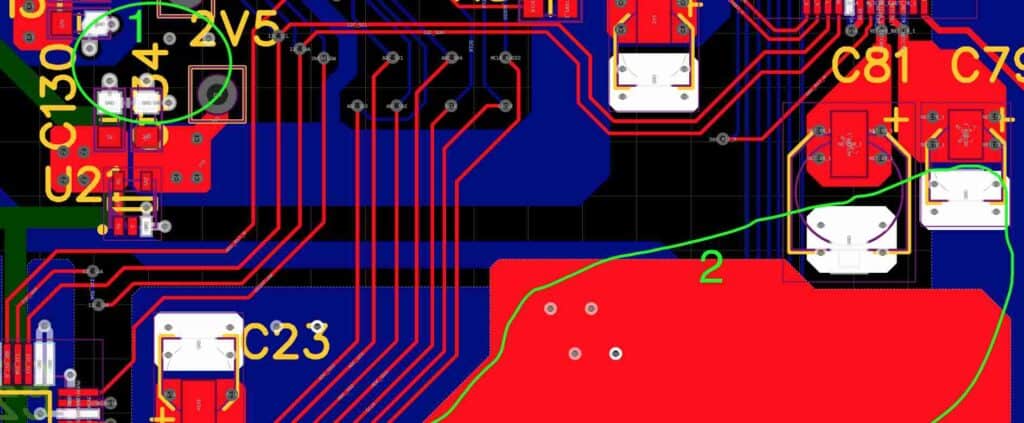
Overview of Digital Logic and Design
Digital logic and design is a field of study that deals with the design and analysis of digital circuits. Digital circuits are electronic circuits that operate on digital signals, which are discrete signals that can take on only a limited number of values. Digital circuits are widely used in modern electronics, including computers, mobile devices, and many other electronic devices.
The design of digital circuits involves the use of logic gates, which are electronic circuits that perform logical operations on digital signals. There are several types of logic gates, including AND gates, OR gates, and NOT gates. These gates can be combined to create more complex circuits, such as adders, multiplexers, and flip-flops.
Digital circuits can be designed using a variety of tools, including software tools, such as logic simulators and computer-aided design (CAD) tools. These tools allow designers to simulate the behavior of digital circuits before they are actually built, which can save time and reduce costs.
In addition to designing digital circuits, digital logic and design also involves the analysis of digital circuits. This involves the use of techniques such as Boolean algebra and truth tables to analyze the behavior of digital circuits. By understanding the behavior of digital circuits, designers can optimize their performance and ensure that they meet the desired specifications.
Overall, digital logic and design is a complex and important field that plays a critical role in modern electronics. By understanding the basics of digital circuits and the tools used to design and analyze them, designers can create high-performance digital circuits that meet the needs of modern electronics.
Boolean Algebra

Boolean algebra is a branch of algebra that deals with binary variables and logical operations. It is named after George Boole, who first introduced it in the mid-19th century. The basic operators of Boolean algebra are AND, OR, and NOT, which are represented by the symbols ∧, ∨, and ¬, respectively.
AND Operator
The AND operator takes two binary inputs and produces a binary output that is 1 only if both inputs are 1. The truth table for the AND operator is as follows:
| A | B | A ∧ B |
|---|---|---|
| 0 | 0 | 0 |
| 0 | 1 | 0 |
| 1 | 0 | 0 |
| 1 | 1 | 1 |
OR Operator
The OR operator takes two binary inputs and produces a binary output that is 1 if at least one input is 1. The truth table for the OR operator is as follows:
| A | B | A ∨ B |
|---|---|---|
| 0 | 0 | 0 |
| 0 | 1 | 1 |
| 1 | 0 | 1 |
| 1 | 1 | 1 |
NOT Operator
The NOT operator takes a single binary input and produces a binary output that is the opposite of the input. The truth table for the NOT operator is as follows:
| A | ¬A |
|---|---|
| 0 | 1 |
| 1 | 0 |
Boolean Expressions
Boolean expressions are constructed using Boolean variables and the basic operators of Boolean algebra. For example, the Boolean expression A ∧ B represents the logical AND of A and B. Boolean expressions can be simplified using various laws and theorems of Boolean algebra.
In conclusion, Boolean algebra is a fundamental concept in digital logic and design. It provides a mathematical framework for analyzing and designing digital circuits using binary variables and logical operations.
Combinational Logic Circuits
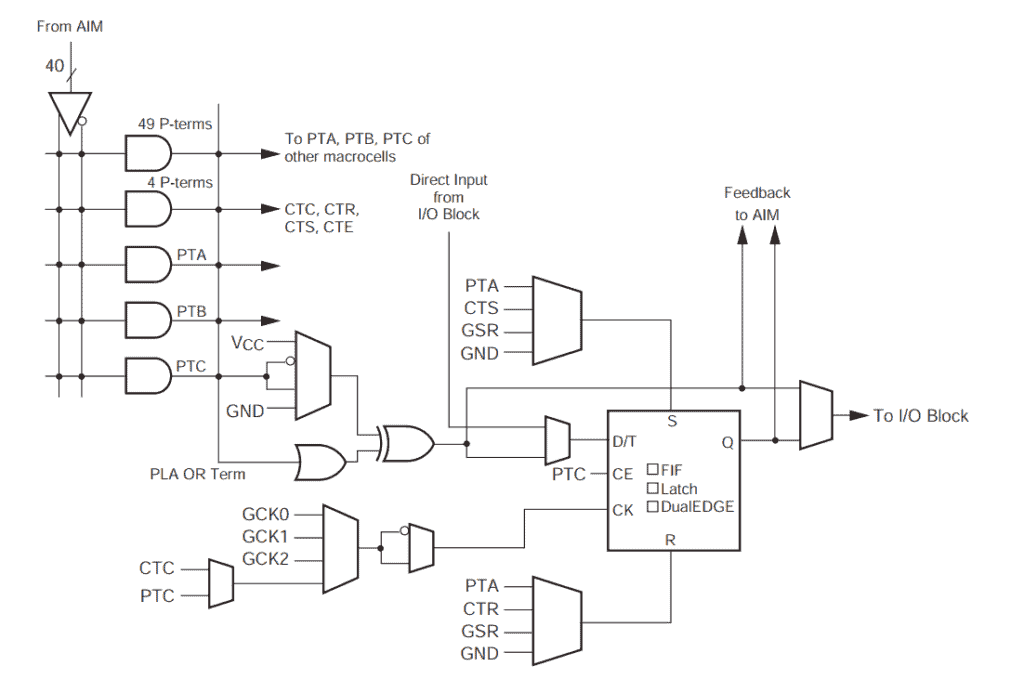
Combinational logic circuits are digital circuits that produce an output based solely on the current input. The output of a combinational circuit is determined by the logic function implemented by the circuit. Combinational circuits are widely used in digital electronics, including microprocessors, memory devices, and communication systems.
The most basic combinational logic circuits are the AND, OR, and NOT gates. These gates can be combined to create more complex circuits such as the NAND and NOR gates. The truth tables for these gates are shown below:
| Input A | Input B | Output |
|---|---|---|
| 0 | 0 | 0 |
| 0 | 1 | 0 |
| 1 | 0 | 0 |
| 1 | 1 | 1 |
| Input A | Input B | Output |
|---|---|---|
| 0 | 0 | 0 |
| 0 | 1 | 1 |
| 1 | 0 | 1 |
| 1 | 1 | 1 |
| Input | Output |
|---|---|
| 0 | 1 |
| 1 | 0 |
Combinational circuits can be designed using Boolean algebra, which is a mathematical system that uses logical operations to manipulate logical values. The designer can use Boolean algebra to simplify the logic function and reduce the number of gates required to implement the circuit.
Another important aspect of combinational circuits is the propagation delay. The propagation delay is the time it takes for the output of the circuit to change in response to a change in the input. The designer must ensure that the propagation delay is within the required limits for the circuit to function properly.
In summary, combinational logic circuits are essential components in digital electronics. They are used to implement logic functions and can be designed using Boolean algebra. The propagation delay must be considered during the design process to ensure proper circuit operation.
Sequential Logic Circuits
Sequential logic circuits are digital circuits that use memory elements to store data and perform operations based on that stored data. These circuits are used in a wide variety of applications, from simple counters and timers to complex microprocessors.
One of the most common types of sequential logic circuits is the flip-flop. Flip-flops are bistable devices that can be in one of two stable states. They are used to store a single bit of information, and can be used to build more complex circuits such as registers and counters.
Another important type of sequential logic circuit is the shift register. Shift registers are used to store and shift data in a serial fashion. They can be used for a variety of applications, such as data storage, data transmission, and signal processing.
One of the key advantages of sequential logic circuits is their ability to perform complex operations based on stored data. For example, a microprocessor uses sequential logic circuits to perform arithmetic and logic operations on data stored in memory. This allows the microprocessor to perform a wide variety of tasks, from simple calculations to complex data processing.
In conclusion, sequential logic circuits are an important part of digital logic and design. They are used in a wide variety of applications, and are essential for building complex digital systems. Whether you are building a simple counter or a complex microprocessor, understanding sequential logic circuits is essential for success in digital design.
Designing Digital Systems

Designing digital systems is the process of creating electronic circuits that can perform specific functions. These circuits are made up of digital logic gates, which are the building blocks of digital systems. The design process involves several stages, including specification, analysis, synthesis, and implementation.
Specification
The first step in designing a digital system is to define its specifications. This involves identifying the inputs and outputs of the system, as well as its behavior under different conditions. The specifications are usually documented in a design specification document, which serves as a blueprint for the design process.
Analysis
Once the specifications are defined, the next step is to analyze the system. This involves breaking down the system into smaller components and analyzing their behavior. The analysis helps identify potential problems and suggests ways to optimize the system’s performance.
Synthesis
The synthesis stage involves creating a design that meets the specifications and addresses any issues identified during the analysis stage. This involves selecting the appropriate digital logic gates and connecting them in a way that produces the desired behavior.
Implementation
The final stage of the design process is implementation. This involves building the circuit and testing it to ensure that it meets the specifications. The implementation stage also involves optimizing the circuit’s performance and making any necessary adjustments.
In conclusion, designing digital systems is a complex process that requires careful planning, analysis, and implementation. By following a structured design process, designers can create circuits that meet the specifications and perform optimally.
Testing and Verification
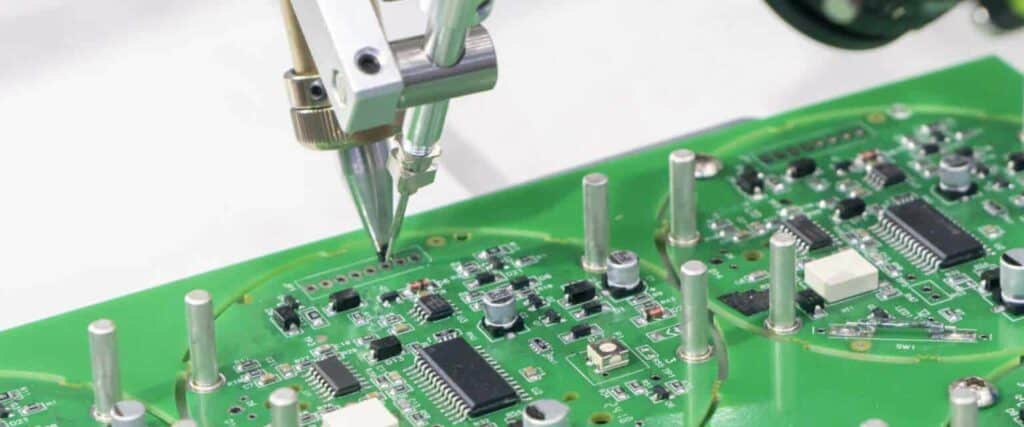
Testing and verification are critical components of digital logic and design. They ensure that the designed system performs as expected and meets the desired specifications. Testing and verification are essential in identifying and eliminating errors in the design process.
There are several types of testing and verification techniques that are commonly used, including simulation, formal verification, and testing on hardware. Simulation involves running the designed system on a computer to test its functionality. Formal verification involves using mathematical methods to prove the correctness of the design. Testing on hardware involves testing the system in the actual hardware environment.
To ensure the accuracy and completeness of the testing process, it is essential to create a comprehensive test plan. The test plan should include the test objectives, the test environment, the test cases, and the expected results. The test plan should also include a schedule for testing and a budget for resources.
In addition to testing, verification is also critical in digital logic and design. Verification involves ensuring that the design meets the specified requirements and that it is free from errors. Verification can be done using various techniques, including inspection, simulation, and testing.
Overall, testing and verification are critical components of digital logic and design. They ensure that the designed system meets the desired specifications and performs as expected. By using comprehensive testing and verification techniques, designers can ensure that their designs are accurate, reliable, and free from errors.
Advanced Topics in Digital Logic and Design
Digital logic and design is a vast field that encompasses a wide range of topics. While the basics of digital logic and design are important, advanced topics can be equally crucial for architects and designers of digital systems. In this section, we will discuss some of the advanced topics in digital logic and design that are worth exploring.
Sequential Logic
Sequential logic is a type of digital logic that is used to store information and produce outputs based on the stored information. It is an essential component of digital systems, and designers must have a good understanding of it. Some of the common types of sequential logic circuits are flip-flops, registers, and counters.
Finite State Machines
Finite state machines are used to model the behavior of digital systems. They are made up of a set of states, inputs, and outputs, and can be used to design complex digital systems. Finite state machines are used in a variety of applications, including control systems, digital signal processing, and communication systems.
Hardware Description Languages
Hardware description languages (HDLs) are used to describe digital systems. They are used to design and simulate digital systems, and can also be used to generate the hardware description for the system. Some of the common HDLs are Verilog and VHDL.
FPGA Design
Field-programmable gate arrays (FPGAs) are integrated circuits that can be programmed to perform specific functions. They are used in a variety of applications, including digital signal processing, control systems, and communication systems. FPGA design involves designing digital systems using FPGAs.
Digital Signal Processing
Digital signal processing (DSP) is the use of digital processing techniques to manipulate signals. DSP is used in a variety of applications, including audio processing, image processing, and control systems. Digital signal processors are used to implement DSP algorithms.
Overall, these advanced topics in digital logic and design are essential for architects and designers of digital systems. By exploring these topics, designers can gain a deeper understanding of digital systems and design more complex and efficient systems.