High speed signal design is an essential aspect of modern electronic systems. As the demand for faster and more reliable communication continues to grow, the design of high-speed signals has become increasingly important. High-speed signals are used in a wide range of applications, including data centers, telecommunications, and consumer electronics.
The design of high-speed signals involves a range of complex factors, including signal integrity, noise, and power consumption. Signal integrity is critical to ensuring that the signal is received accurately and reliably at the receiving end. Noise can be introduced by a variety of factors, including electromagnetic interference (EMI) and crosstalk. Power consumption is also a key consideration, as high-speed signals can consume significant amounts of power, which can impact the overall efficiency of the system.
Overview of High Speed Signal Design
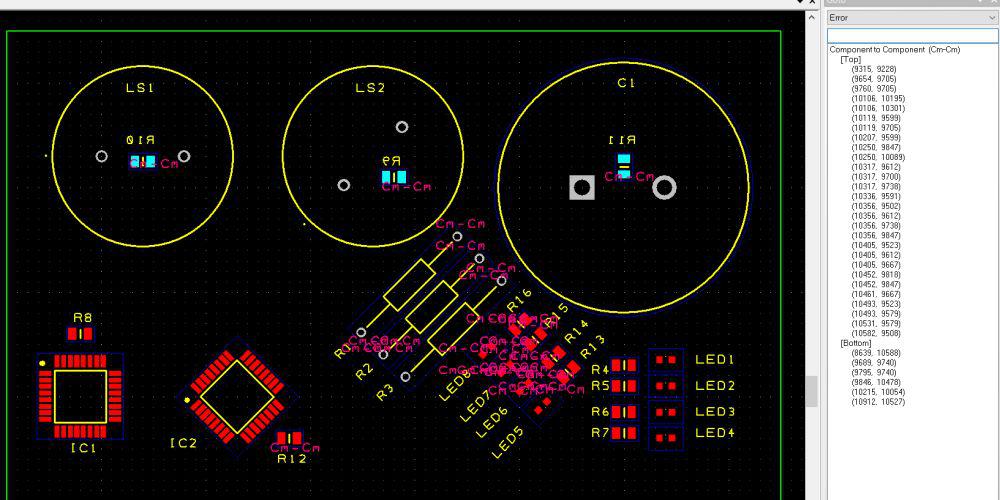
High-speed signal design refers to the process of designing electronic circuits that can transmit data at high speeds without losing signal quality. These circuits are used in a wide range of applications, including computer networks, telecommunications systems, and consumer electronics.
The design of high-speed circuits is complex and requires a deep understanding of signal transmission theory, circuit design, and signal integrity. High-speed signals are subject to a range of issues, including signal reflections, crosstalk, and noise. These issues can cause signal distortion, which can lead to errors in data transmission.
To overcome these challenges, high-speed signal designers use a range of techniques to improve signal quality. These techniques include impedance matching, signal termination, and signal conditioning. Impedance matching is used to ensure that the input and output impedances of the circuit match the impedance of the transmission line. Signal termination is used to reduce signal reflections, while signal conditioning is used to filter out noise and other unwanted signals.
In addition to these techniques, high-speed signal designers also use a range of tools to simulate and test their designs. These tools include computer-aided design (CAD) software, signal analyzers, and oscilloscopes. These tools allow designers to model and analyze their circuits before they are built, which can help to identify and resolve potential issues before they become problems.
In conclusion, high-speed signal design is an essential aspect of modern electronics design. It requires a deep understanding of signal transmission theory, circuit design, and signal integrity, as well as the use of a range of techniques and tools to improve signal quality. By using these techniques and tools, high-speed signal designers can create circuits that can transmit data at high speeds with minimal signal distortion and errors.
Factors Affecting High Speed Signal Design

High-speed signal design is a complex process that requires careful consideration of various factors that can impact the signal’s performance. The following sub-sections describe some of the key factors that can affect high-speed signal design.
Transmission Line Effects
Transmission line effects are a critical consideration in high-speed signal design. These effects arise due to the distributed nature of the transmission line, which can cause signal reflections, impedance mismatches, and other issues. These effects can be mitigated by using proper termination techniques, selecting appropriate transmission line geometries, and using high-quality materials.
Reflections and Impedance Mismatch
Reflections and impedance mismatch can cause significant signal degradation in high-speed designs. Reflections occur when a signal encounters an impedance mismatch, causing a portion of the signal to be reflected back towards the source. Impedance mismatches can be caused by changes in the transmission line geometry, connector interfaces, or other factors. Proper termination techniques and careful design can help mitigate these effects.
Crosstalk and Noise
Crosstalk and noise can also cause significant issues in high-speed signal design. Crosstalk occurs when signals from adjacent lines interfere with each other, while noise can be caused by a variety of factors, including power supply noise, electromagnetic interference, and other sources. Careful routing and shielding techniques can help mitigate these effects.
Power Integrity
Power integrity is critical in high-speed designs, as any noise or fluctuations in the power supply can impact the signal’s performance. Proper decoupling and grounding techniques can help ensure that the power supply is stable and noise-free.
Ground Bounce
Ground bounce can occur when there is a voltage difference between different ground points in the system, causing current to flow through the ground plane. This can cause noise and other issues in high-speed designs. Careful grounding techniques and proper layout can help mitigate these effects.
In summary, high-speed signal design is a complex process that requires careful consideration of various factors that can impact the signal’s performance. By understanding the factors described above and using proper design techniques, it is possible to create high-speed designs that meet the required specifications and perform reliably.
Design Techniques for High Speed Signals
Termination Techniques
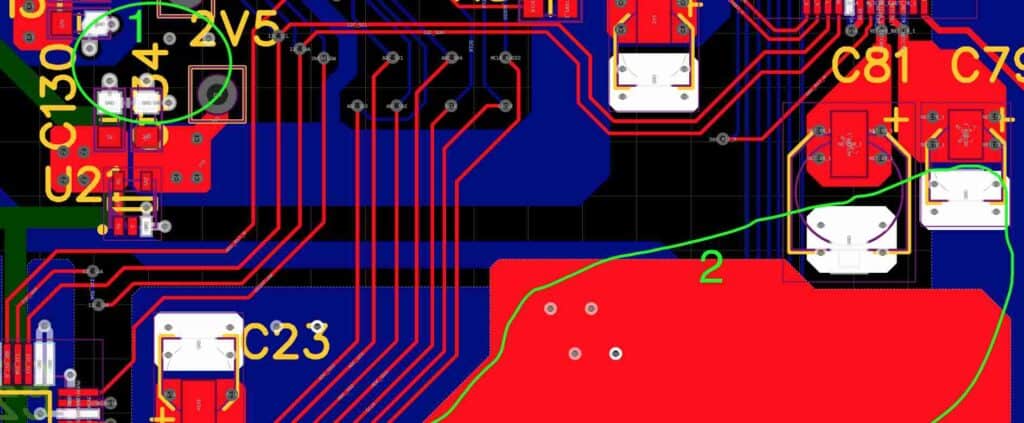
Termination techniques are important for high-speed signals to prevent reflections and signal distortion. The most common termination techniques are series and parallel termination. Series termination involves placing a resistor in series with the signal line, while parallel termination involves placing a resistor in parallel with the signal line. The choice of termination technique depends on the impedance of the transmission line and the type of driver used.
Routing and PCB Layout
Proper routing and PCB layout are crucial for high-speed signals. To minimize signal distortion, the trace length should be kept as short as possible. The trace width and spacing should also be carefully chosen to maintain the desired impedance. Ground planes should be used to minimize noise and crosstalk. The placement of components and routing of traces should be carefully planned to minimize signal reflections and interference.
Clock Distribution
Clock distribution is critical for high-speed digital systems. Clock signals should be routed separately from other signals to minimize noise and crosstalk. The clock tree should be carefully designed to ensure that the clock signal arrives at all destinations simultaneously. Clock buffers and drivers should be used to ensure that the clock signal has enough drive strength to reach all destinations.
Signal Integrity Analysis
Signal integrity analysis is important to ensure that high-speed signals are free from distortion and noise. Simulation tools can be used to analyze signal integrity and predict the behavior of the system. The analysis should include the effects of transmission line impedance, reflections, crosstalk, and noise. The results of the analysis can be used to optimize the design and ensure that the system meets the desired performance specifications.
In conclusion, proper high-speed signal design requires careful consideration of termination techniques, routing and PCB layout, clock distribution, and signal integrity analysis. By following these design techniques, high-speed digital systems can be designed to meet the desired performance specifications.
Advanced High Speed Signal Design Topics
Equalization Techniques
Equalization techniques are used to correct for signal distortion and noise that can occur in high-speed signal transmission. There are several types of equalization techniques used in high-speed signal design, including:
-
Pre-emphasis: This technique increases the amplitude of high-frequency components of a signal before transmission to reduce the effects of attenuation and noise.
-
De-emphasis: This technique reduces the amplitude of high-frequency components of a signal after reception to reduce the effects of attenuation and noise.
-
Adaptive equalization: This technique adjusts the equalization parameters in real-time to compensate for changes in the transmission channel.
SerDes Design
SerDes (Serializer/Deserializer) is a type of integrated circuit that converts parallel data to serial data and vice versa. SerDes design is an important part of high-speed signal design, as it is used in many applications, including:
-
High-speed data transmission over copper and optical fibers
-
High-speed networking and communication systems
-
High-speed storage systems, such as solid-state drives (SSDs)
SerDes design involves several key components, including clock and data recovery (CDR), phase-locked loops (PLLs), and serializers and deserializers.
Optical Communication Design
Optical communication design involves the design and implementation of high-speed optical communication systems, including:
-
Fiber optic communication systems
-
Free-space optical communication systems
-
Optical interconnects
Optical communication design requires a thorough understanding of the properties of light, including its wavelength, polarization, and dispersion, as well as the design and implementation of optical components, such as lasers, modulators, and detectors.
In conclusion, advanced high-speed signal design topics are an important area of study for engineers and designers working in the field of high-speed signal transmission. Equalization techniques, SerDes design, and optical communication design are just a few of the key topics that are important to understand when designing high-speed signal systems.
Conclusion
In conclusion, high-speed signal design can be a complex and challenging task. However, with careful attention to detail and a thorough understanding of the underlying principles, it is possible to achieve reliable and robust signal transmission at high speeds.
One of the key considerations in high-speed signal design is the need to minimize noise and interference. This can be achieved through the use of appropriate shielding, grounding, and filtering techniques. Additionally, careful selection of components and materials can help to minimize signal distortion and ensure consistent performance.
Another important aspect of high-speed signal design is the need to manage signal reflections and impedance mismatches. This can be achieved through careful design of transmission lines, including the use of controlled impedance and termination techniques.
Overall, successful high-speed signal design requires a combination of technical expertise, attention to detail, and careful planning. By following best practices and taking a systematic approach to design, it is possible to achieve reliable and robust signal transmission at high speeds.